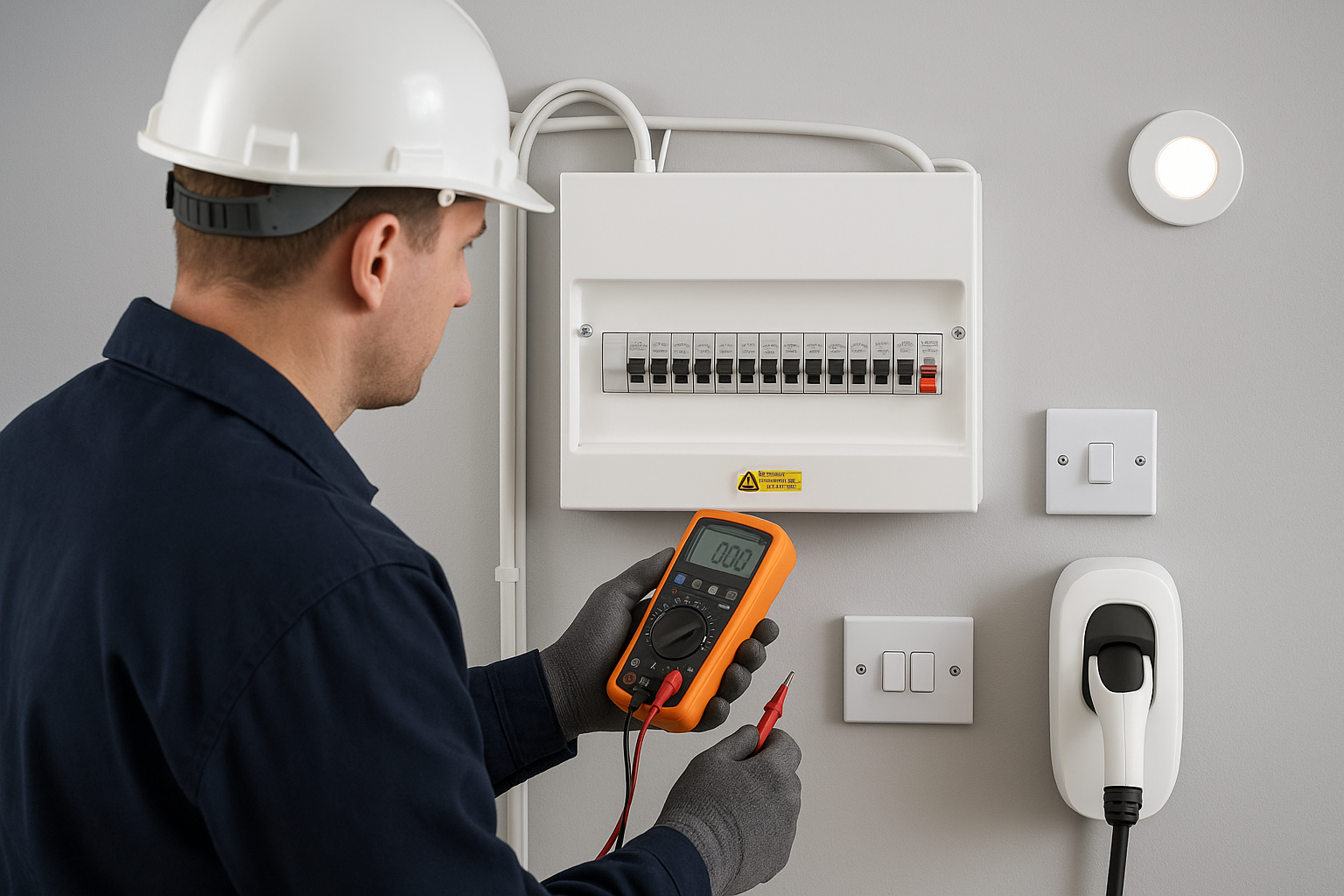
If you are dealing with repeated tripping, an old rewireable fuse board, no RCD protection or inspection findings that point to an outdated board, a consumer unit replacement may be the right fix. At Knight Wire Electricians, we help homeowners, landlords, property managers and local businesses in Teddington decide whether the right answer is a repair, an upgrade, or a full replacement.
This page is designed to help you understand the symptoms, likely causes and decision points before any work is booked. In many homes around Broad Street, Teddington High Street, near Teddington Station and properties close to Bushy Park or Teddington Lock, we see a mix of older wiring, converted flats, Victorian terraces, modern flats and small commercial units. That mix means the consumer unit has to be judged in context, not by age alone.
We provide clear advice on consumer unit replacement Teddington customers can understand, including consumer unit upgrades, RCD and RCBO protection, old fuse board replacement, surge protection devices, and circuit labelling and testing. If you are unsure whether you need a repair visit or a full board change, call 020 3519 9561 or email info@teddington-electricians.co.uk.
For safety, do not open the board yourself or attempt wiring changes. If a circuit is overheating, sparking, repeatedly tripping or showing signs of damage, switch off if it is safe to do so, keep clear of the area and arrange a qualified electrician to inspect it.
Consumer Unit Upgrades in Teddington
A consumer unit upgrade is often the best option when the existing board still functions but no longer gives the level of protection or practicality needed for the property. This is common in Teddington homes where the wiring may have been improved in stages over time, but the board has not been updated to match.
Typical signs that an upgrade may be suitable include:
- Frequent nuisance tripping on one or more circuits
- Mixed protective devices that are difficult to identify or reset
- Limited space in the board for additional circuits or improvements
- Poor or unclear circuit labelling
- Older boards that do not provide modern RCD or RCBO protection
- Inspection findings that recommend improvement rather than immediate replacement of the full installation
In some homes, especially converted flats and older rewires, the issue is not that every circuit is failing. The problem may be that the board arrangement is dated, awkward to isolate, or not set up for modern loads such as electric cooking, home offices, larger appliance use or outdoor equipment. A careful inspection helps separate a board that can be upgraded from one that should be replaced.
When we attend a property, we look at the board condition, the circuit arrangement, the age and type of wiring, signs of heat damage, evidence of previous alterations and how the installation is being used day to day. That practical approach matters in Teddington, where a flat near the station may have a very different setup from a family house near Bushy Park or a small shop off the High Street.
Repair vs upgrade vs rewire decision point: if the board is serviceable and the wiring is broadly sound, an upgrade may be enough. If the board is obsolete, damaged, missing modern protection or linked to a wider pattern of faults, replacement is usually the safer route. If the wiring itself is failing, brittle or not fit for current use, the problem may go beyond the consumer unit and point towards rewiring.
RCD and RCBO Protection in Teddington
RCD and RCBO protection is one of the main reasons people ask about consumer unit replacement. These devices are designed to disconnect supply quickly when they detect certain fault conditions, helping reduce the risk of electric shock and limiting the effects of faults on the installation.
If your property has no RCD protection, or if only part of the installation is protected, the board may be due for an upgrade. This is often raised after inspection findings, tenancy changes, renovation work or the addition of new appliances and outdoor circuits.
Common symptoms that point towards protection issues include:
- Trips that happen when using a specific appliance or socket group
- Outdoor sockets or lighting without suitable protection
- A board that has no modern residual current protection at all
- Intermittent faults that are difficult to trace without proper testing
- A split-load arrangement that is no longer ideal for the way the property is used
RCD and RCBO protection Teddington customers ask about is not just about compliance; it is also about practical fault management. In a home with multiple occupied rooms, a board that isolates only the affected circuit can reduce disruption compared with an older arrangement that takes out several parts of the property at once.
We explain the options in plain language. In some cases, a targeted repair may resolve the immediate fault on a circuit. In other cases, the board itself is part of the problem and replacing it with a modern unit that includes the right protection is the better long-term solution. For landlords and property managers, this is especially important where tenants need a safe, easy-to-understand installation and clear circuit identification.
After any protection-related work, testing matters. The board should be checked, circuits should be labelled clearly, and the installation should be verified so the customer understands what has changed and how to use the system safely.
Old Fuse Board Replacement in Teddington
Old fuse board replacement Teddington jobs often involve rewireable fuses, dated enclosures, poor labelling or signs that the board has reached the end of its practical life. These boards are still found in some older properties, especially where the original electrical installation has not been fully modernised.
We often see this in Victorian terraces, older maisonettes, converted flats and properties that have had partial electrical work over the years. The issue is not simply that the board looks old. The concern is whether it still provides reliable protection, clear isolation and sensible fault management for the property’s current use.
Signs that replacement may be more appropriate than repair include:
- Cracked or heat-marked board components
- Repeated fuse failures or frequent resetting
- Missing covers, poor internal arrangement or signs of past modification
- No obvious spare capacity for future circuits
- Unclear circuit identification
- Inspection notes that indicate deterioration or non-compliance with current expectations
Where a board is old but the rest of the wiring is serviceable, replacement can be a straightforward way to bring the installation into a more practical and safer condition. If the wiring is also aged, brittle or not suitable for current loads, the board replacement may be part of a wider electrical improvement plan.
For some customers, the decision is driven by a failed inspection finding. For others, it is a pattern of problems: lights flickering, sockets behaving unpredictably, or the property needing a more dependable setup before a sale, tenancy change or refurbishment. In those cases, we talk through whether an electrical repair, consumer unit upgrade or rewire is the most sensible next step.
We also advise keeping the area around the board clear and ensuring that any damaged covers or exposed parts are not touched. If you suspect overheating or burning, isolate the supply only if it is safe and immediate, then call an electrician without delay.
Surge Protection Devices in Teddington
Surge protection devices are often discussed alongside consumer unit replacement because they can help reduce the impact of transient overvoltage events on sensitive equipment. In homes and businesses that rely on computers, smart controls, kitchen appliances, routers, TVs or office equipment, surge protection can be a useful addition when the board is upgraded.
Surge protection devices Teddington customers ask about are especially relevant where there is a higher concentration of electronics, home working equipment or business-critical devices. A modern consumer unit can be configured to include surge protection where appropriate, but the decision should be based on the property’s layout, risk profile and existing installation condition.
Examples where surge protection may be considered include:
- Homes with lots of electronic equipment
- Converted flats with shared building services
- Small offices and shops near Teddington High Street
- Properties with recent upgrades to lighting or heating controls
- Installations that have already shown sensitivity to voltage events or equipment failure
Surge protection is not a cure for every fault. If a circuit is tripping because of a damaged appliance, loose connection or insulation problem, that needs fault finding first. If the board is outdated, that may need replacement first. The right order matters: repair the fault, decide whether the board needs upgrade or replacement, then consider whether added protection is appropriate.
We explain this clearly so customers do not pay for unnecessary work. The aim is to match the equipment to the property, not to add features that do not solve the actual problem.
Circuit Labelling and Testing in Teddington
Circuit labelling and testing are essential parts of a consumer unit replacement, but they also matter when a board is being assessed for repair or upgrade. A well-labelled board helps you identify what has tripped, what can be isolated and which part of the property is affected. Testing helps confirm whether the installation is operating as expected after work is completed.
In real-world jobs, poor labelling is often one of the first signs that a board has not been properly reviewed in years. We see this in older rewires, mixed-age installations and properties where circuits have been added over time without the board being updated to match. That can make faults harder to trace and can turn a simple problem into a disruptive one.
Our approach includes checking the consumer unit, identifying circuits where possible, testing the installation as part of the work and explaining the findings in plain English. If the board is being replaced, circuit labelling should be brought up to date so the customer knows what each protective device controls. If the issue is a repair only, testing still helps confirm that the immediate fault has been found and that the affected circuit is safe to return to use.
Decision point: if testing shows a localised fault on one circuit, a repair may be enough. If testing reveals multiple issues, poor protection, heat damage or an obsolete board, replacement becomes more likely. If the wiring condition is poor across the property, a rewire may be the more appropriate long-term solution.
Aftercare matters too. Once the work is complete, we advise customers to keep the board accessible, note any circuits that were repaired or isolated, and report any further tripping promptly. Landlords and property managers should keep records of the work and any circuit changes so future inspections are easier to manage.
Recent local work has included a fuse box advice visit in Kingston where circuits were tripping and we explained consumer unit repair or upgrade options in plain language, a consumer unit fault check in Hampton Hill where we investigated a tripping circuit and isolated the affected circuit before giving clear repair advice, and a socket replacement visit in Richmond where damaged socket fronts were replaced and the circuit was tested so the customer could use the outlets safely again. That is the type of practical, no-nonsense support we bring to Teddington properties too.
We also support related domestic and commercial services including electrician visits, emergency electrician callouts, electrical repairs, consumer unit work, lighting installation, socket installation, electrical fault finding and domestic electrician support. Whether you are near Teddington Station, on Broad Street, close to Teddington Lock or in a nearby area such as Twickenham, Hampton Wick, Kingston, Hampton Hill or Richmond, we can help assess the fault and recommend the most sensible next step.
If your board is old, tripping, poorly labelled or missing protection, the right choice may be repair, upgrade or replacement depending on what the inspection shows. Call Knight Wire Electricians on 020 3519 9561 or email info@teddington-electricians.co.uk to request a visit today.
Address: 65 Broad St, Teddington TW11 8QZ, United Kingdom
Opening hours: 24 hours
Service area: Teddington and nearby locations including Twickenham, Hampton Wick, Kingston, Hampton Hill and Richmond.